Emergency nursing: self-care is vital if you want to care for others

Pressures in emergency care are intense and in such a gruelling environment it is vital for nurses to look after their own health and well-being
I was chatting with a trauma nurse friend at the school gates the other day. She is one of those inspiring, strong, dependable, unflappable, always-has-your-back women, who I can only imagine is phenomenal at her job in a large London hospital.
And yet, for the first time, I saw her full of frustration and at the end of her tether at the worsening situation in her workplace.
Ambulances queuing, a full waiting room, no hospital beds and no sign of the demand abating; and this is summer, we’re not talking about the usual mid-winter crisis here.
‘I wish everyone would stop talking about winter pressures,’ she fumed, ‘there is no such thing anymore, it is like this all year round, but the government and media still persist in using the term and it drives me nuts!’
Her words weren’t earth-shattering, we’ve heard them before, but what struck me was how emotionally charged they were, and how this calm and highly capable woman was shaken.
And I know she isn’t alone.
Corridor care, workplace violence, burnout and moral injury are recurring themes
I recently attended the No Ordinary Shift emergency care conference in Stratford-upon-Avon, where I heard the same story from emergency nurses working in rural, suburban and city hospitals across the UK.
‘Self-care is now a non-negotiable for the nurses working and surviving in these intense, high-pressure settings’
Corridor care, workplace violence and aggression, burnout and moral injury were recurring themes among the presentations, many of which shared groundbreaking innovations making a positive difference to patient care and outcomes.
But the big take away for me was that self-care is now a non-negotiable for the nurses working and surviving in these intense, high-pressure settings, day after day with no relief in sight.
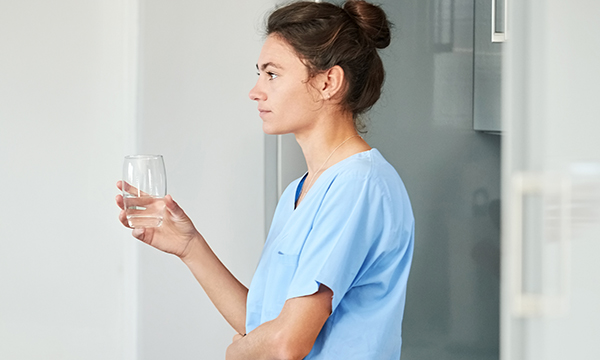
And how even small moments of respite on shift – a 10-second pause and a deep breath before pulling back the curtain to reveal the patient in the next bay, a few glugs of cool water enroute to the waiting room, making time for a quick toilet break – can help to soothe and regulate an overwhelmed nervous system that is constantly on high alert.
Trying to build ‘me time’ into an already overstretched day might feel impossible, but micro moments of calm can be the difference between coping and burnout.
Don’t forget: taking care of your own needs is essential if you wish to be able to care for others.
 Have you tried RCNi Plus yet?
RCNi Plus offers unlimited access to RCNi Learning, Emergency Nurse, Nursing Standard, our other specialist journals and RCNi Revalidation Portfolio to store your CPD for revalidation. Use the discount code TRIALPLUS to get it half price for three months. Click here for more details