Hospital at home: challenging perceptions of older people’s care
The hospital at home model transfers decision-making into people’s homes and challenges assumptions that safety and nursing expertise reside in hospitals
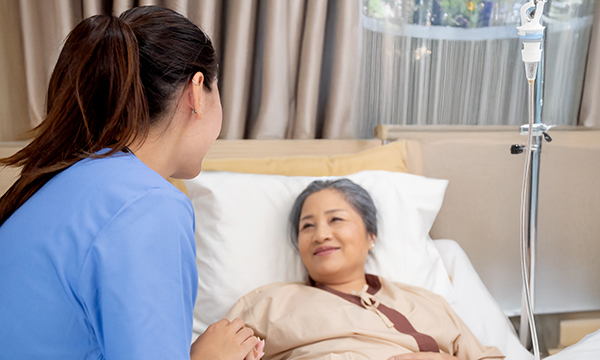
The hospital at home model transfers decision-making into people’s homes and challenges assumptions that safety and nursing expertise reside in hospitals
Hospital at home models alter nurses’ perception of acute care, frailty and risk, rather than simply reorganising services.
As illustrated in our article, Providing acute care at home to older adults with frailty: nurses’ experiences of working with a hospital at home service, transferring decision-making into people’s homes challenges entrenched assumptions that safety and expertise reside within hospital walls.
The home exposes what hospitals often conceal: the interaction between illness, cognition, mobility, medication burden, family capacity and the environment itself.
A more holistic and person-centred form of acute care
Nursing judgement becomes more visible and more consequential.
Decisions about escalation, investigation and intervention are informed not only by physiology, but also by what matters to the person, what is feasible at home, and what risks are acceptable.
In this context, approaches such as comprehensive geriatric assessment underpin a more holistic and person-centred form of acute care.
Hospital at home reframes risk. Admission is no longer the default marker of safety; nurses must balance the risk of deterioration at home against the harms of hospitalisation, including delirium, deconditioning and loss of independence.
This work requires expertise in uncertainty management, advanced assessment skills and confidence in shared decision-making with older people and those closest to them, supported by credible escalation pathways and cultures that value proportionate risk.
‘Acute expertise travels beyond institutional boundaries’
For hospital nurses, these models prompt reconsideration of how acute expertise travels beyond institutional boundaries.
For community and care home nurses, they affirm that acuity and complexity are already central to their work and warrant equal recognition, training and career progression.
‘Across settings, hospital at home highlights the need for frailty expertise, interdisciplinary practice and systems thinking’
Our findings also highlight the implications for workforce development, particularly the growing importance of advanced and consultant-level practice in delivering acute care beyond hospitals.
Across settings, hospital at home highlights the need for frailty expertise, interdisciplinary practice and systems thinking.
Hospital at home invites you to reframe acute care
Adapting healthcare for different settings, the 10 Year Health Plan for England shifts from analogue to digital and hospital to community care, challenging the idea that quality outcomes require institutional treatment.
Nurses are expected to lead systems where acute interventions occur without causing decline, aiming to expand care beyond hospitals rather than replace them.
Ultimately, hospital at home invites a reframing of acute care: less as a place, and more as a capability that must increasingly be delivered wherever older people live.