


Image
Integrating student leadership and co-design in nurse education
Promoting student engagement and helping develop leadership, innovation and advocacy skills
19 Nov 2025
Image
Medicines management for people with dementia
Learn about the challenges and cautions associated with pharmacological interventions
03 Dec 2018
Image
Book_Reviews_04

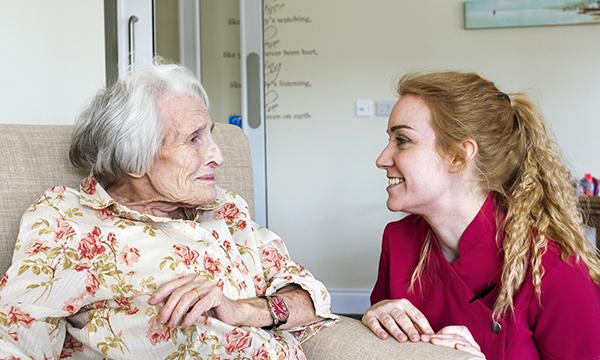
This overview of dementia care is ideal for family members and partners of people with the condition.
08 Mar 2017
Image
Care home pic

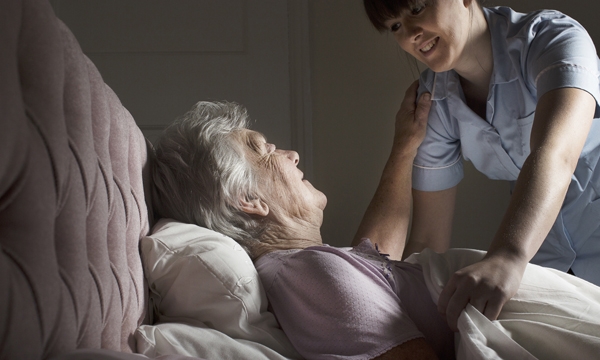
Care homes are an increasingly important part of the UK’s healthcare system. Despite their importance, particularly in providing care for older people with complex needs, the sector is often disadvantaged and overlooked by commissioners, policymakers and researchers. The authors provide an overview of some important challenges for the sector. These challenges relate to funding, education and research, overseas staff, career pathways and staff recruitment and retention.

They conclude that recruitment and retention of registered nurses is arguably the greatest challenge, as high staff turnover is the catalyst for other challenges identified.

The care home sector should be considered as equal to hospitals, community settings and hospices. Care homes offer registered nurses many opportunities for development of clinical and organisational skills.
28 Oct 2016
Image
Palliative care

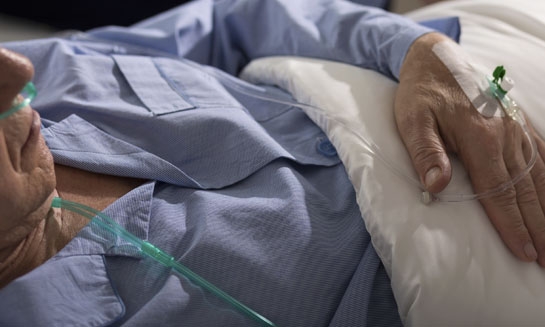
This article, the second of two, provides healthcare practitioners with an overview of best practice in palliative and end-of-life care, including nutrition, hydration, oral hygiene and pain management. Communication and spiritual care are discussed, as well as care after death. Providing support and education for families is an important aspect of palliative and end-of-life care. Care home nurses should ensure that the person living with dementia is at the centre of decision making, and provide care that is inclusive of their needs and wishes. The article is framed in a care home context; there is little research about how to optimise palliative care for people living with dementia in care homes
29 Jun 2016
Image
Palliative care

The terms palliative and end of life care are often used interchangeably and healthcare practitioners may perceive that palliative care is only appropriate during the terminal stages of an illness. This article, the first of two parts, provides healthcare practitioners with an overview of the concept of palliative care. It explains how this can be differentiated from end of life care and how it should be commenced in a timely manner, so that people who are living with dementia can contribute to the planning of their future care and death. The policies and tools used in the provision of palliative and end of life care are discussed, including advance care planning and The Gold Standards Framework. The article is framed in a care home context; there is little research about how to optimise palliative care for people living with dementia in care homes. The second part of this article will discuss end of life care and the best practices for providing end of life care, including nutrition and hydration, oral hygiene, pain management and spiritual care.

22 Jun 2016

Aim To present a narrative review of the empirical literature on the use of horticultural therapy in dementia care.

Method A comprehensive literature search, conducted in December 2014, resulted in the selection of 15 primary research articles for review. Of these, three used qualitative methods, five used quantitative methods and seven used mixed methodology. The articles were critically appraised, and the narrative synthesis used a thematic approach whereby prominent themes from the articles were grouped to form representative themes.

Findings Three main themes emerged from the narrative synthesis: the emotional health of people living with dementia, their perceived self-identity and their levels of engagement.

Conclusion Horticultural therapy can be beneficial. At a macro-level, it is an inexpensive therapy that does not require specialist training to deliver. At a micro-level, it enhances the wellbeing of people living with dementia. Recommendations are made to promote access to appropriate horticultural therapy for people living with dementia, and for further research in this area.

20 Jan 2016

Person-centred dementia care has been emphasised in health services for a number of years. However, one fundamental but rarely considered aspect of such care is the importance of a person’s culture or ethnicity.

13 Jan 2016

This book takes 40 myths and stereotypes related to ageing and older people and explores them for accuracy.

09 Dec 2015

Distress is one of the most common clinical manifestations associated with dementia. Pharmacological intervention may be appropriate in managing distress in some people. However, best practice guidelines advocate non-pharmacological interventions as the preferred first-line treatment. The use of non-pharmacological interventions encourages healthcare professionals to be more person-centred in their approach, while considering the causes of distress. This article provides healthcare professionals with an overview of some of the non-pharmacological approaches that can assist in alleviating distress for people living with dementia including: reminiscence therapy, reality orientation, validation therapy, music therapy, horticultural therapy, doll therapy and pet therapy. It provides a summary of their use in clinical practice and links to the relevant literature.

25 Nov 2015

There is a plethora of literature on person-centred care and its importance in health care. The principles of person-centred care are especially important for people living with dementia because of the clinical manifestations of the disease. This article intends to provide nurses with an overview of the work of Tom Kitwood and how it pertains to providing best practice in dementia care. Various person-centred theories have been developed. However, Kitwood’s work is by far the most widely referred to in dementia care. An understanding of Kitwood’s ideas, in particular those of malignant social psychology and positive person work, enables nurses to develop competence in delivering optimum person-centred care to people with dementia in clinical practice.

14 Oct 2015

Many people living with a dementia are either not recognised as having pain or do not receive effective treatment. Currently 50% of older adults living with dementia in nursing home settings have been identified as having pain, but about half of these may be unable to communicate their experience and so do not receive pain relief or treatment. The person’s resulting distress may manifest as ‘challenging behaviour’ that is often attributed to the dementia and is not appreciated as a reaction to an unmet need such as pain. Evidence suggests that if ‘challenging behaviour’ occurs in a person living with a dementia, prompt use of validated pain assessment and improved, person-centred pain management can reduce the distress and improve the quality of life for the service user, staff and other care-givers. This will involve appropriate training of practitioners and also multi-agency collaboration.

07 Jul 2015

Conducting interviews is one of the most common ways of collecting data in healthcare research. In particular, interviews are associated with qualitative research, where researchers seek to understand participants’ experiences through their own words and perspectives. This article will help healthcare researchers prepare to carry out interviews as part of their research. It will also emphasise important skills to consider during the interview process. Consideration will also be given to remedying interviews that do not go according to plan, as well as identifying appropriate debriefing processes post-interview. With this knowledge, healthcare researchers are more likely to conduct effective interviews that will yield better quality data and protect the participant.

24 Jun 2015

The term ‘named nursing’ was introduced in the UK more than 25 years ago but it has re-emerged recently in the light of recommendations made in the Francis report on the poor standards of care at Mid-Staffordshire NHS Foundation Trust. The original definition of named nurse by the Department of Health was someone that a patient could identify as responsible for their care from hospital admission to discharge. It was largely practised in the UK exclusively but there are now various accounts of its use throughout Europe, particularly Scandinavia, and North America.

This article provides an overview of the named nursing concept. It provides recommendations for implementation of a named nursing system in nursing home settings, because most previous recommendations have referred to acute hospitals.

26 Mar 2015

The management of constipation can be challenging because it is often considered self-correcting and not usually life-threatening. While these assumptions can be correct, constipation has the potential to be detrimental to the wellbeing of people affected, and long-term mismanagement of the condition can mask potential underlying causes. While nursing professionals in primary care are often aware of the available treatment options for constipation, there is limited evidence available to assist them in carrying out an appropriate clinical assessment on which to inform treatment choices. This paper will illuminate best clinical practice in primary care for the assessment of constipation, using history taking from the patient and inspection, palpation, percussion and auscultation of the abdominal area.

27 May 2014

Oncology is rapidly changing. Over the past few years there has been an increase in the number of patients receiving oral chemotherapy, which is often administered as tablets away from the hospital setting and in the absence of direct health professional support. This situation places onus on patients to not only administer their medication, but also to report any deterioration in their health. Medication adherence in oral chemotherapy is therefore a major concern. This article examines medication adherence for people receiving oral chemotherapy and the importance of concordant communication practices.

08 May 2014

Over the past decade, dolls have been used increasingly as a therapeutic device for people with dementia. While there has not been much empirical research carried out on the topic, current evidence suggests that engagement with dolls can promote wellbeing. This has been described in the literature as a reduction in challenging behaviour, greater engagement with others and even increased dietary intake. Providing people with dementia with dolls has supporters and critics. This article seeks to supply healthcare professionals with a synopsis of the phenomenon as well as illuminating some of the pertinent debates associated with this therapy.

30 Apr 2014

The number of people with dementia who have not received a formal diagnosis is high, in the UK and also internationally. Government strategies aim to raise public and professional awareness about the condition and increase rates of timely diagnosis. Benefits associated with timely diagnosis include earlier access to medication and being able to plan future care. Despite these benefits, a number of factors contribute to delay in, or in some cases denial of, diagnosis to people with dementia.

This article aims to provide nurses, who are important healthcare professionals in the diagnostic process, with an overview of the literature on disclosing diagnosis to people with dementia.

27 Nov 2013